
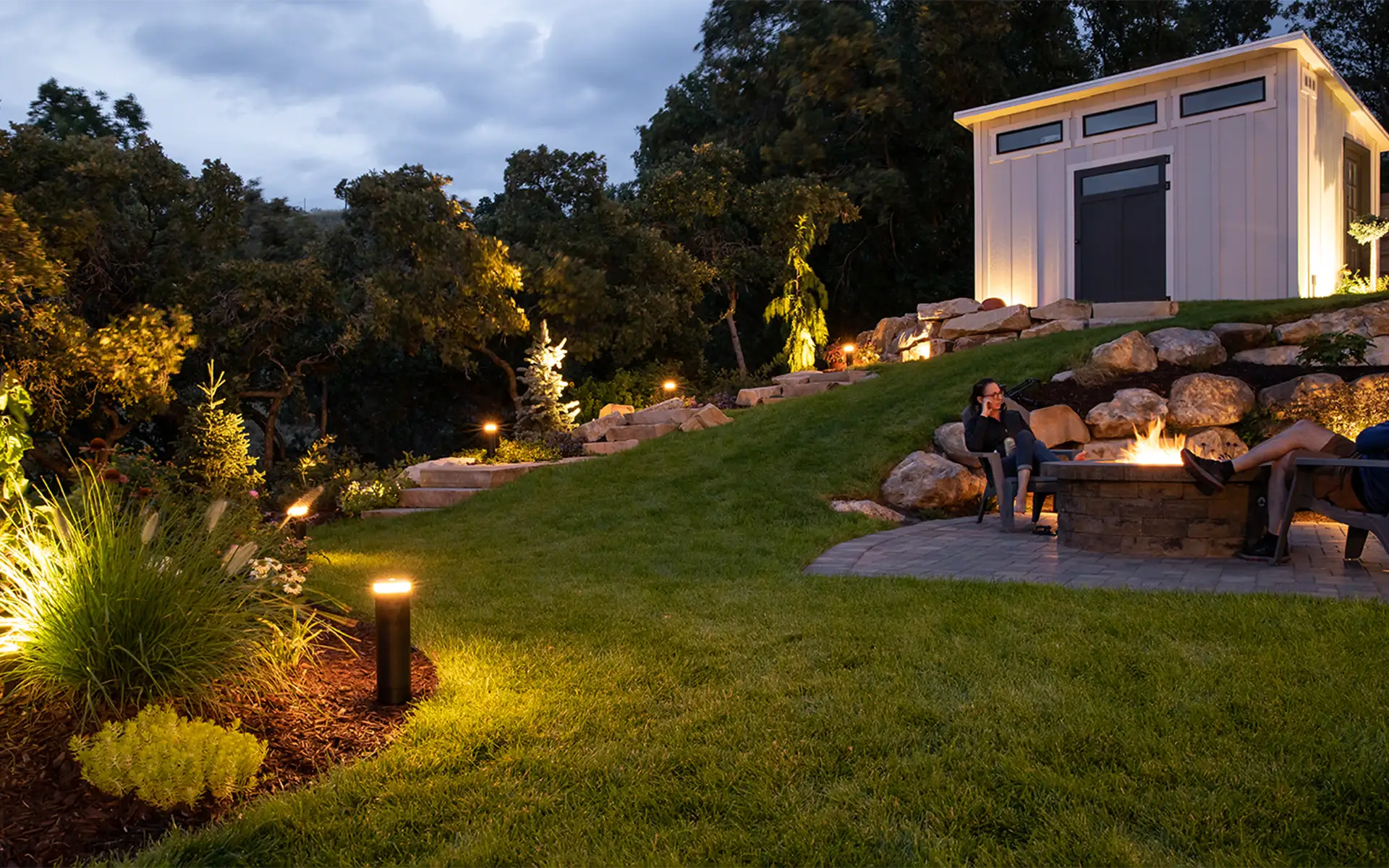
An outdoor audio system can transform a backyard or patio into an extension of your home’s entertainment space. However, there’s more to great outdoor sound than mounting a speaker or two. Many factors affect how well a system performs, from open spaces and background noise to speaker placement and wiring. Before you buy, it’s important to understand your options and how to plan a system that fits your space and delivers consistent sound.
Learn what to consider before installing an outdoor audio system, from choosing the right speakers to understanding installation requirements and deciding whether to tackle the project yourself or call in a professional.
Key Takeaways
- Learn how to plan outdoor audio zones and choose the right speakers for your space.
- We compare outdoor speaker types, including wall-mounted, landscape, rock, and pool speakers.
- We explain speaker placement, sound coverage, wiring, power, and amplification requirements.
- We explore outdoor audio system controls, smart home integration, and system costs.
- Learn when DIY or professional installation is best for an outdoor sound system project.
What Is an Outdoor Audio System?
An outdoor audio system is a thoughtfully designed sound setup that delivers music and entertainment to your patio, deck, pool area, or backyard. These outdoor-friendly distributed audio systems use strategically placed speakers, amplifiers, wiring, and audio controls to distribute sound evenly and clearly across one or more outdoor entertainment areas.
The difference between outdoor and indoor audio systems is the space. Indoors, walls and ceilings help contain and reflect audio. With outdoor spaces, sound travels into open space, where wind, traffic, and other background noise can affect what you hear. This is why planning and placement matter so much for sound performance. A well-designed system should account for these conditions by placing speakers strategically and using the right amplification to deliver clear, balanced sound without relying on excessive volume.
Plan Your Outdoor Audio System Before You Buy
Planning is important, so take the time to think about how you want to use your outdoor space first. A system designed for a small covered patio will have very different requirements than one intended to cover a pool, outdoor kitchen, and large backyard. Things to consider during planning include:
- Where do you spend time or entertain outdoors?
- Do you want music throughout the property or only in specific areas?
- Do you want the outdoor system to integrate with indoor entertainment?
Map Your Listening Zones
Listening zones are the areas you want to hear music throughout your space. Zones might include a covered patio, outdoor dining space, pool deck, garden seating, or around a fire pit. Examining each area will help determine how many speakers each needs and where to position them.
For example, a small patio may only need a couple of mounted speakers, but a larger backyard with a pool and outdoor kitchen will need more strategically placed speakers. The goal is to space speakers throughout each listening area to create consistent sound without dead or loud spots.
This is a good time to decide how you want to control the sound distribution. Do you want separate audio zones? With a multi-zone system, you can play the same music throughout your outdoor space or control each area independently.
Consider Your Neighbors and Local Noise Rules
Outdoor speakers can carry sound farther than you might expect, especially in open spaces without walls to contain it. During planning, consider how speaker placement and volume could affect neighbors. Also, check your local noise ordinances and any HOA restrictions for rules about permitted sound levels, quiet hours, and outdoor entertainment.
Types of Outdoor Speakers
Once your outdoor sound zones are mapped, it’s time to start comparing speaker options. There are plenty of variations to compare depending on installation and mounting, aesthetics, and connectivity. Compatibility is also a factor if you want to integrate the outdoor audio system with indoor entertainment control.
Outdoor Ceiling, Wall and Under-Eave Speakers
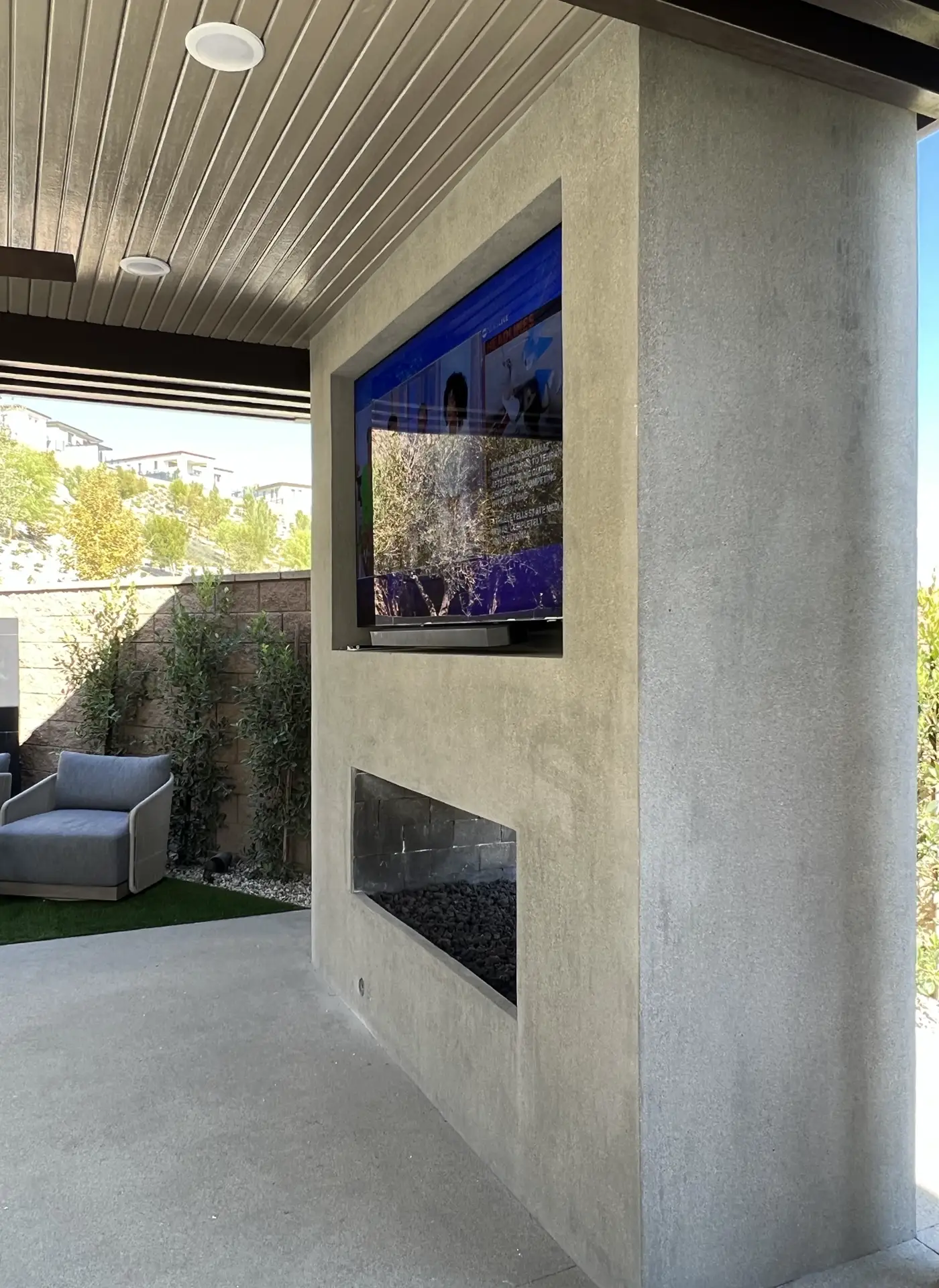
For areas near the house, such as patios and decks, wall-mounted and under-eave speakers work well. They can attach to exterior walls or roof overhangs and are positioned to direct sound toward seating areas. Look for models with weather-resistant enclosures and mounting hardware designed to withstand outdoor conditions.
For covered patios and outdoor kitchens, ceiling speakers provide overhead sound without taking up wall or floor space. If you prefer an unobtrusive look, consider invisible speakers. Sonance features weather-resistant in-wall and in-ceiling speakers designed for demanding outdoor environments, including poolside installations.
Landscape Speakers and In-Ground Subwoofers
For areas farther from the house, landscape speakers and in-ground subwoofers provide discreet, high-quality 360-degree outdoor sound. Many systems use multiple speakers positioned around the yard to distribute music evenly, along with an in-ground subwoofer to provide deeper bass. Unlike traditional speakers that project sound from a single location, landscape systems spread audio across a wider area. This makes them perfect for larger properties with multiple listening zones, including pools and gardens.
One of our favorites, the Episode Radiance outdoor audio and lighting system, allows homeowners to coordinate outdoor sound and lighting with discreet in-ground speakers and surface-mounted designs that blend into the surrounding environment.
Rock Speakers and Planter Speakers
These are another great option for aesthetically pleasing landscape speakers. Rock speakers feature weather-resistant enclosures designed to resemble natural stones, effortlessly blending into gardens, pool areas, and landscaped yards.
Planter speaker options can disguise audio inside decorative outdoor planters or within outdoor casings that sit discreetly among plants and garden beds. Both options let you position speakers closer to listening areas without drawing attention to the equipment.
Wired vs Wireless Outdoor Speakers
Outdoor speakers come in both wired and wireless options, each with its own advantages. Choosing between the two depends on your property, equipment, and preferred sound quality and control.
- Wired speakers: These connect to an amplifier or receiver through speaker cable, providing a reliable connection without depending on WiFi. Installation requires running and often burying cable. A wired system may be more reliable for larger outdoor spaces, or when the outdoor audio system integrates with a whole-home sound system.
- Wireless speakers: These speakers rely on WiFi or Bluetooth, eliminating the need for cables between speakers and music sources and making them easier to deploy and move. WiFi models will need reliable network coverage throughout your outdoor space to perform well, and some systems also require a power connection.
Some professionally installed multi-speaker outdoor systems may use a combination of both wired and wireless technology. If you are unsure, a professional installer can help determine which approach makes sense for your layout, equipment, and future expansion plans.
Pool Speakers: What to Know Before You Install
With pool speakers, water and moisture exposure make speaker selection and placement especially important. Not every outdoor speaker is designed for poolside use, so look for models that can withstand water spray, with a minimum rating of IPX5. If you want swimmers to hear music underwater, specialized underwater speakers are also available. These models require dedicated mounting hardware and installation designed specifically for submerged use. Beyond moisture, also consider how much direct sunlight they’ll encounter and select options accordingly.
Pool decks and surrounding seating areas often need multiple speakers to distribute music evenly without creating loud spots near the water or sending excessive sound toward neighboring properties. Landscape speakers often work well, letting you place them around the pool and surrounding yard without mounting equipment directly to the pool structure.
For poolside installations, a professional can help you evaluate speaker locations, electrical connections, wiring, and equipment protection. Proper planning accounts for the unique safety and environmental considerations of a pool area while ensuring the best sound performance.
Outdoor Speaker Placement and Coverage
Speaker placement plays a major role in how well your outdoor audio system performs. Without walls and ceilings to reflect and contain sound, audio can dissipate quickly, making it harder to maintain consistent volume and clarity across a large area.
Distribute speakers throughout your listening zones to create more even coverage, so people don’t have to be directly next to a speaker to hear.
Here are some placement considerations to keep in mind:
- Space speakers strategically to avoid gaps in sound coverage.
- Aim speakers toward where listeners gather, rather than toward open property lines or neighboring homes.
- Account for obstacles, such as trees, walls, furniture, and landscaping, which can affect sound distribution.
- Balance speaker spacing and volume with multiple speakers at moderate volume rather than relying on a few speakers to fill a large space.
- Position subwoofers according to the manufacturer’s recommendations and your listening-area layout.
For larger properties, an optimized outdoor audio system offers an effective way to distribute sound across multiple areas. MIR Audio Video can design and install systems with strategically positioned, discreet speakers, calibrated amplification, and integrated controls to deliver clear, consistent sound throughout your outdoor space.
Wiring, Power, and Amplification
To ensure reliable performance, your system also needs properly rated wiring, compatible amplification, and enough power to deliver clear sound coverage. The factors that influence these decisions are your property size, number of speakers, cable distances, and speaker system type. Considering them during planning helps prevent performance issues and makes it easier to expand your system later.
Outdoor Speaker Wire and Burial
If you choose a wired system, use speaker cable rated for outdoor installation. Standard indoor speaker wire isn’t designed to withstand prolonged exposure to moisture, temperature changes, and other outdoor conditions.
For underground installations, choose direct-burial-rated speaker wire with a protective outer jacket designed to withstand underground conditions. Running the cable through PVC adds more protection against landscaping tools, rodents, and accidental damage.
Cable thickness, measured in gauge, matters too. Longer wire runs and higher power requirements may call for thicker cable to reduce resistance and minimize signal loss. A professional installer can help determine the appropriate wire gauge based on the distance, speaker impedance, and system requirements.
Before digging, identify underground utilities first to avoid cutting them. Also, check local electrical codes for burial depth and conduit requirements. Also, ensure your cable routes are accessible to make repairs and system upgrades easier.
How Much Power Do Outdoor Speakers Need?
The amount of power your outdoor speaker system needs depends on several factors, including speaker sensitivity, impedance, listening area, number of speakers, and how loudly you want to play music.
Outdoor speakers often require more amplification than indoor systems. Plus, larger yards and multiple listening zones may require additional amplifier channels and power.
Pay attention to these two specifications when comparing options:
- Speaker power handling, usually listed in watts, indicates how much amplifier power a speaker can safely handle under specified conditions. Check the manufacturer’s recommended amplifier power rather than relying on the maximum wattage alone.
- Amplifier output indicates how much power the amplifier can deliver to each channel at a specified impedance. Make sure it can support the number of speakers and their combined power requirements.
An appropriately sized amplifier helps your system deliver clear, consistent sound without distortion. Using an amplifier that’s too small can cause problems at higher volumes, and simply choosing the highest-wattage amplifier doesn’t guarantee better sound. For larger outdoor installations, a dedicated multi-channel amplifier can usually provide the power and flexibility needed to manage several speakers and listening zones independently.
8-Ohm vs 70-Volt Systems
If planning a wired outdoor audio system, there are two common configurations: 8-ohm and 70-volt. Both can deliver quality outdoor sound, but they serve different installation needs.
An 8-ohm system uses conventional speakers connected to an amplifier and is a popular choice for residential audio installations with fewer speakers. Each speaker draws power based on its impedance and the amplifier’s output. As you add speakers, you must carefully calculate the total load to avoid exceeding the amplifier’s capabilities.
A 70-volt system uses a transformer-based design that allows multiple speakers to connect to a single amplifier over longer cable runs. Each speaker has a selectable power tap, which determines how much amplifier power it receives. For this reason, 70-volt systems work better for large properties with many speakers spread across different outdoor areas.
Here’s how they compare:
| Feature | 8-Ohm System | 70-Volt System |
|---|---|---|
| Best for | Smaller residential setups | Larger properties, multiple speakers |
| Wiring | Conventional speaker wiring | Parallel connections |
| Cable runs | Less reliable over long distances | Better suited to longer runs |
| Expansion | Requires careful impedance and load calculations | Easier to add compatible speakers within system capacity |
| Sound performance | Well-suited for high-fidelity residential audio | Delivers excellent distributed sound with proper design |
So while neither configuration is automatically better than the other, each may suit specific settings better. An 8-ohm system may be ideal for a covered patio or smaller backyard, while a 70-volt system can simplify installations that require numerous speakers across a large property.
Controlling Your Outdoor Audio System
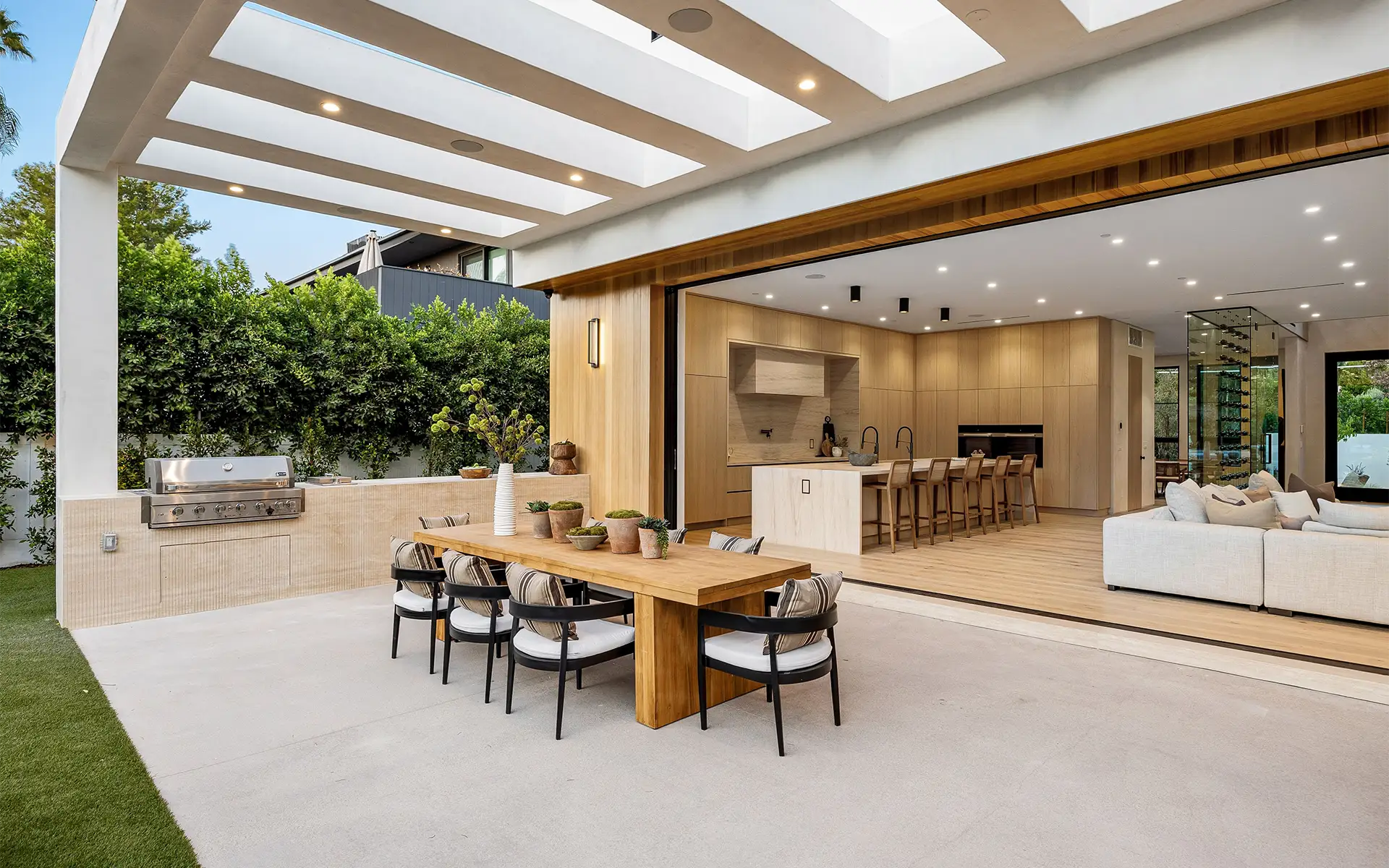
With the right system controls, you can choose what to play, adjust volume, and manage listening zones without accessing your audio equipment directly.
If your outdoor speakers are part of a multi-room audio system, you can play the same music indoors and out, or customize audio in selected areas. This is a great feature when entertaining, since you can keep music going on the patio while others watch a game inside. Better yet, you can also make outdoor audio part of a larger entertainment setup, like a backyard movie theater.
Using a smart home platform such as Control4 home automation coordinates your outdoor audio controls with other home systems. Depending on how your system is configured, you can manage music, lighting, and other outdoor features with a few taps.
Dependable outdoor WiFi coverage is essential if your system uses WiFi-enabled speakers or app-based controls to avoid interruptions and unresponsive devices.
How Much Does an Outdoor Audio System Cost?
The cost of an outdoor audio system depends on your property size, the number and type of speakers, and how much installation and integration the project requires. A simple setup for a covered patio will cost less than a multi-zone system that spans a large backyard, pool area, and outdoor kitchen.
Several factors influence the overall investment:
- Speaker type and quantity
- The number of amplifiers and other audio equipment
- The type of wiring and installation
- The number of audio zones and controls
- Integration with smart home systems
The best way to estimate the cost is to start with how you want to use your outdoor space. You may not need speakers everywhere, as a well-planned system can provide better coverage without adding unnecessary equipment. A professional AV installer can assess your property, recommend options, and provide a quote based on your goals and installation requirements.
DIY vs Professional Outdoor Audio Installation
Simpler outdoor audio projects are straightforward enough to install yourself, such as adding a pair of wireless speakers on a covered patio. Larger systems, however, involve more planning and technical considerations than simply mounting speakers and connecting them to an amplifier.
If you plan to DIY your outdoor sound system, confirm the speakers are rated for the environment, position them for good coverage, and make sure your network or audio connections are reliable.
If your project involves multiple listening zones, buried speaker wire, landscape speakers, poolside or underwater audio, or integration with existing home automation, contact a professional. An experienced installer can evaluate the property, determine speaker placement, size the amplification, plan cable routes, and configure the controls. A professionally designed system can also make future upgrades easier. If you plan to add speakers, expand your outdoor entertainment area, or connect audio with lighting, those needs can be considered from the beginning.
Talk to an Outdoor Audio Expert
Planning a new outdoor audio system or want to improve an existing setup in the greater Los Angeles area? The outdoor audio experts at MIR Audio Video can help! We will assess your space and determine what it needs to deliver consistent, clear audio the way you want to enjoy it. Our team handles design, installation, and maintenance with professional, friendly service, including trusted integration with existing smart home systems.
Frequently Asked Questions: Outdoor Audio Systems
How many outdoor speakers do I need?
The number of outdoor speakers depends on the size of the space your audio will cover, the layout, and how evenly you want sound distributed.
Can outdoor speakers stay outside all year?
Outdoor-rated speakers are generally designed to withstand exposure to weather, moisture, and temperature changes. However, their durability depends on the manufacturer’s environmental ratings and the conditions where they’re installed. Choose speakers rated for their level of exposure, and follow the manufacturer’s recommendations for placement, cleaning, and maintenance.
Are landscape speakers worth it?
Landscape speakers are worth considering if you want consistent sound throughout a larger backyard without prominent speaker boxes mounted on walls or ceilings. They blend into garden beds, lawns, and other outdoor features, and multiple satellite speakers can distribute music more evenly across patios, pools, and landscaped areas.
Can I connect outdoor speakers to my indoor sound system?
Yes, outdoor speakers can often connect to an existing indoor or whole-home audio system, letting you play the same music inside and outside or choose different music and volume levels for separate areas. Compatibility depends on your existing receiver or amplifier, available connections, and whether you want independent outdoor audio controls.
Do I need a separate amplifier for outdoor speakers?
Not always. An existing receiver or multi-zone amplifier can power outdoor speakers if it has enough capacity for the additional speakers and their power requirements. Larger systems may need a dedicated amplifier or additional channels to support multiple speakers and listening zones.