
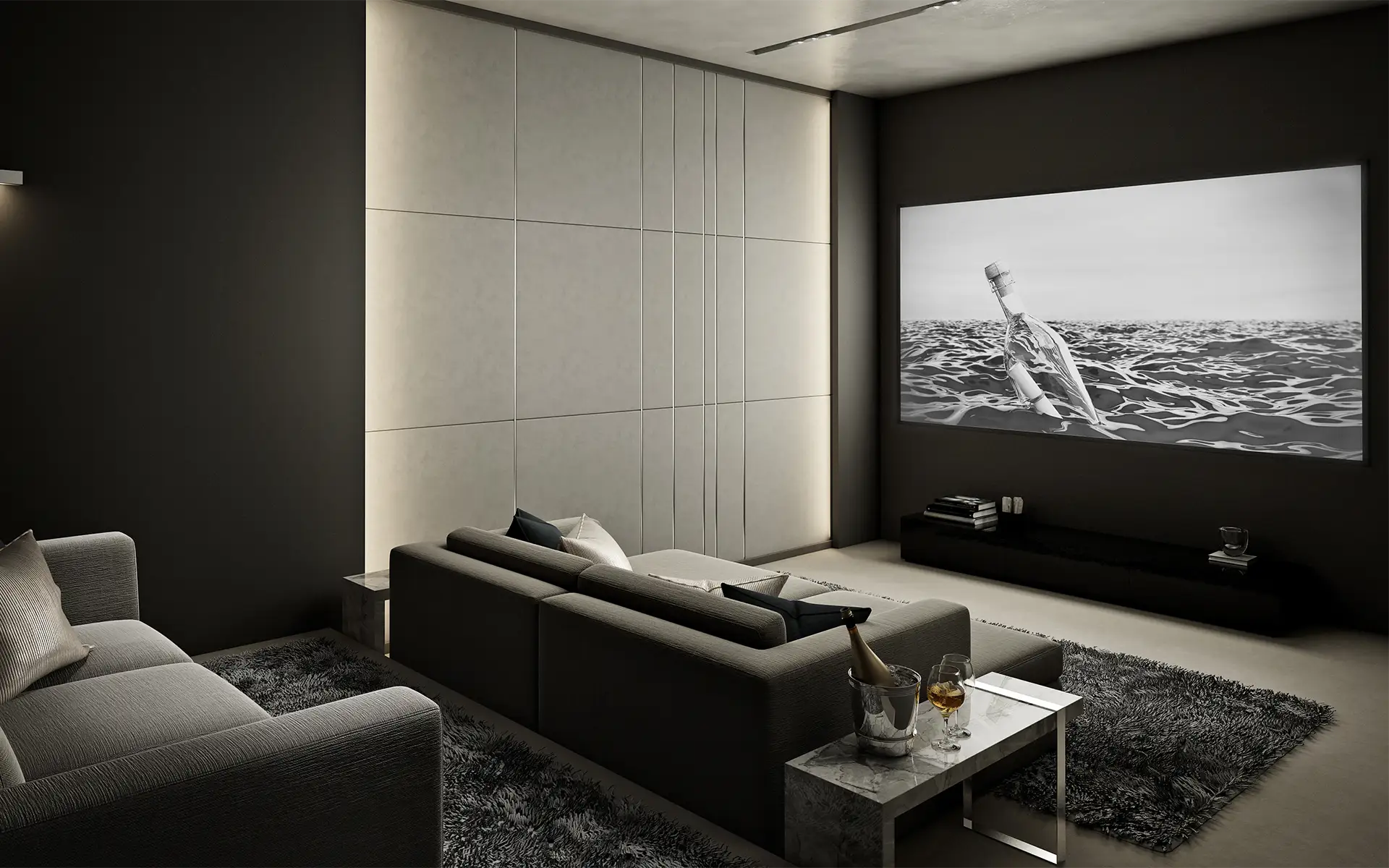
Nothing can ruin your design aesthetic more than glaringly out-of-place tech. Dangling wires, bulky speakers, or in-your-face screens can sabotage even the most carefully designed space. To discreetly integrate tech, the trick is to balance performance with aesthetics, which is possible with forethought, not afterthought. We’re sharing professional tips on how to hide speakers, TVs, and more, covering what the pros do to achieve a clean, luxury look.
Key Takeaways
- Why AV concealment needs a plan first, placement later.
- Tips on how to hide TV wires and speakers for a clean look.
- Why professional installation checks all the boxes.
Why Concealment Needs to Be Planned, Not Fixed
If you’ve ever walked into a beautifully decorated room only to find a cleverly hidden TV or immersive sound with no visible speakers, you’re witnessing great AV design. Intentionally blending tech into a room’s aesthetic requires careful thought and planning. As we like to say, “clean concealment is better planned than fixed.”
If you are building a home or redesigning your interior, you’ve landed in the right place for AV concealment inspiration. We’ve helped countless Los Angeles homeowners (and commercial spaces) blend their high-performance audio equipment and screens into spaces for a clean, luxury look that never sacrifices performance. With the right planning and placement, your AV equipment can wow while begging the question: “Where’s the tech?”.
How to Hide a TV
Screens are a part of daily life. But in the home, they don’t need to dominate your space. Determining how to hide TV wires and large screens takes thoughtful planning. Over the years, we’ve helped clients create optimal viewing spaces that can also feel screen-free. The key is thoughtful placement, clean wiring, and the right combination of design and technology. Whether you want a concealed TV indoors or out, the right plan delivers a seamless result that complements your design rather than competing with it.
The Samsung Frame TV
This TV is extremely popular for a reason. Samsung designed this sleek system to seamlessly blend into any space without sacrificing screen quality. Its design features magnetic bezels in various colors and finishes, giving it the appearance of a real picture frame. When the TV screen is off, it displays artwork or other images with a matte finish that reduces glare, mimicking a real canvas. It also features a “no gap” mount, which allows the TV to sit nearly flush against the wall. With a Samsung Frame TV, your screen transforms into curated artwork when not in use, then seamlessly shifts to deliver exceptional picture quality for streaming and everyday viewing.
Motorized TV Lifts
A motorized TV lift keeps your screen completely out of sight until you are ready to watch. These design-forward solutions conceal your screen within a console, cabinetry, or architectural feature, and then automatically bring it into view with the touch of a button. The TV is mounted on a hidden mechanism that can rise from the furniture, lower from the ceiling, or retract into a custom enclosure. Whether controlled by a remote, a wall switch, or smart home automation systems, the experience is seamless and intentional, keeping your space clean and uncluttered when the screen is not in use.
Built-In Media Walls and Joinery
With built-in media walls or joinery, screens are integrated directly into the space’s architecture. The result is the intentional placement of your TV, which never distracts from the room’s aesthetic and truly blends into the decor. The options are endless and fully design-based. TVs can be recessed into the wall and hidden by art, mirror, or sliding or folding panels. They can also be framed within millwork or incorporated into custom cabinetry.
TV Above the Fireplace, and How to Do It Right
In most family or living rooms, the ideal spot for a TV is right above the fireplace. However, if you don’t want the screen to dominate the space, there are plenty of options. If you can’t figure out how to hide TV wires or screens above your fireplace for a clean look, follow these tips:
- Plan wiring and power placement early so cords can be routed cleanly behind the wall
- Keep the TV aligned with the wall using a flush or recessed mount
- Frame the TV with built-ins or millwork for an integrated look
- Disguise and hide the screen with art, sliding panels, or a Samsung Frame TV
- Choose finishes and wall colors that soften contrast and help the TV blend in
- Account for heat and ventilation to protect both the TV and surrounding materials
- Optimize viewing height with a tilt mount or lowered mantel design when possible
- Work with a professional to ensure everything feels intentional, seamless, and built in
How to Hide TV Wires and Cables
Let’s get specific about unsightly wires and cables, both of which are design killers. Again, this design flaw is best addressed before installation, not fixed after. However, if in-wall wiring or custom recessed spaces aren’t possible, there are additional options for hiding wires.
In-Wall Wiring, The Gold Standard
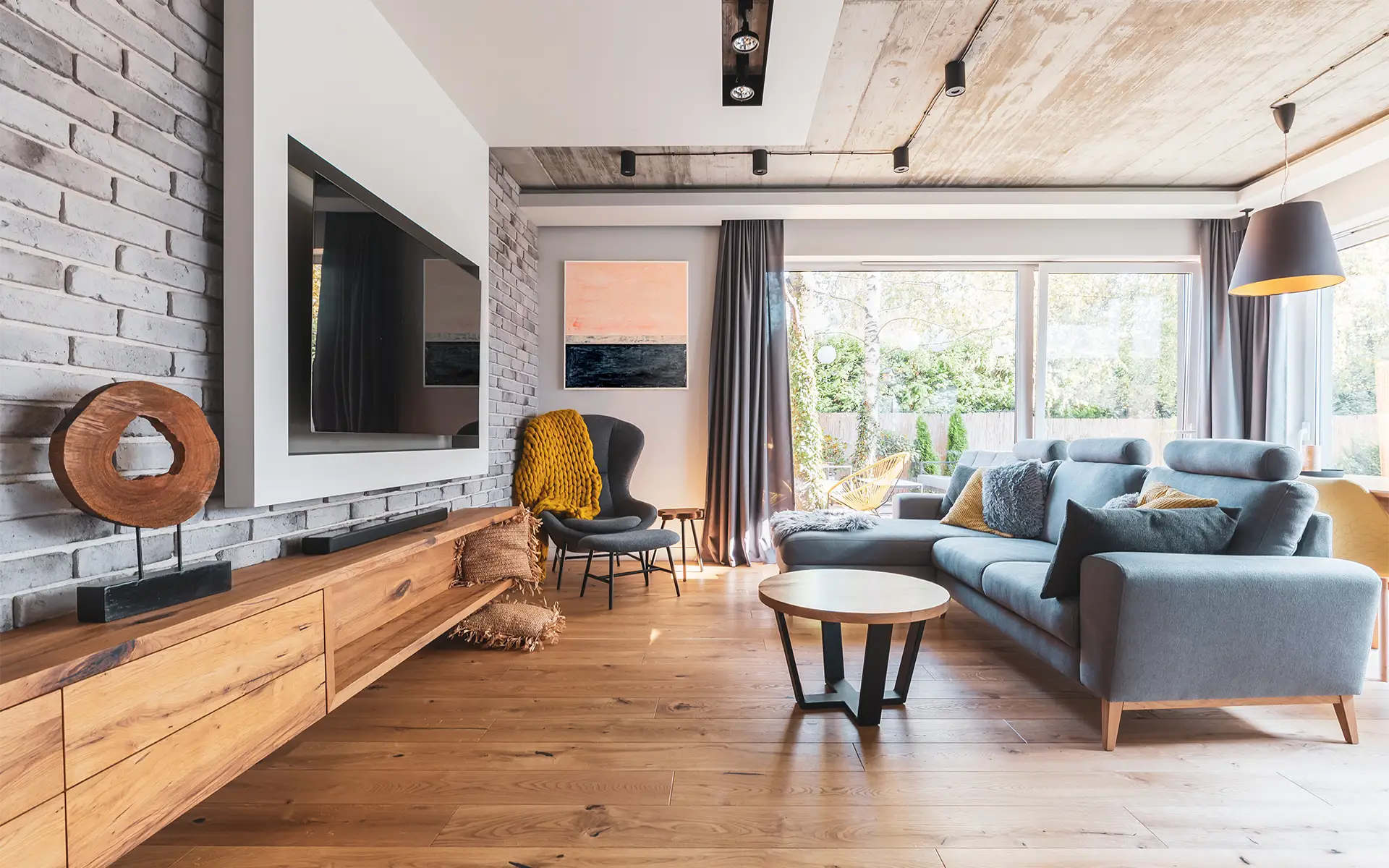
In-wall wiring is the most professional and visually seamless solution for concealing wires and cables for an ultra-clean finish. This involves routing power and AV connections behind the wall. This eliminates exposed cords and reduces visual clutter entirely. In-wall wiring typically requires planning and professional installation to ensure a refined, built-in look that supports both performance and design.
Recessed Media Boxes
When considering how to hide TV cables in-wall, many opt for recessed media boxes. These enclosures are designed to fit into a recessed wall cavity, keeping power outlets and AV connections within the enclosure. They are most often used behind TVs, allowing the screen to sit closer to the wall for a cleaner look. For this solution, there must be sufficient wall depth, which isn’t always possible with brick, stone, or heavily obstructed walls.
Cable Channels and Raceways
Cable channels, also known as raceways, cable tracks, or wire ducts, are surface-mounted conduits designed to route, organize, and protect wiring. They are a practical solution for hiding wires when in-wall wiring or custom installations aren’t possible. Cable channels essentially enclose the wires and cables to create a clean, structured pathway that reduces visual clutter. Many options can be painted or finished to match the surrounding wall for a more seamless look.
Wireless and Streaming Solutions
Of course, eliminating wires completely is another great option, and today’s wireless technology makes it possible. Wireless speakers are especially popular and, positioned correctly, can create clear, balanced sound throughout a space. However, there is no true “wireless” TV, as they still need to be plugged in for power. If you’re leaning toward mostly wireless solutions, it’s important to ensure the space’s wireless network systems provide enough bandwidth to support uninterrupted listening and streaming.
How to Hide Speakers Without Sacrificing Sound Quality
Clear, balanced sound is essential to creating an immersive experience that enhances how you live and entertain in your space. To achieve crisp audio, high-quality speakers deliver when positioned optimally. Yet, can that happen without sabotaging a room’s aesthetic? Can speakers even be completely hidden? Yes and yes. Whether you want to know how to hide speakers in a living room or in the backyard, here are professional tips for various scenarios.
In-Wall and In-Ceiling Speakers
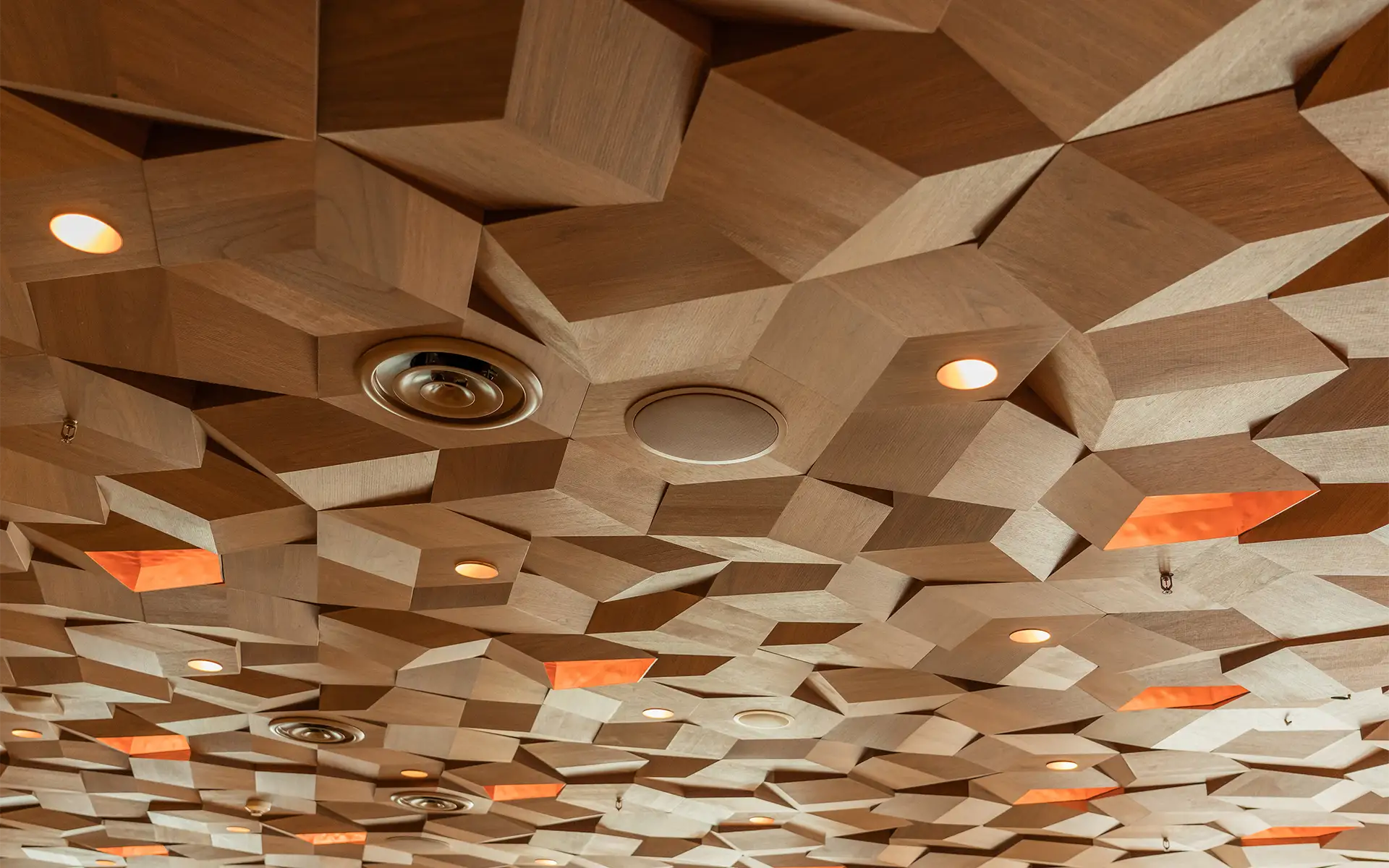
In-wall and in-ceiling speakers are sleek and discreet, blending into the space for a near-invisible finish. They feature perforated or metal mesh grill covers that sit flush with walls and ceilings and diffuse sound without affecting sound quality. Whether featured in one room or throughout the home as part of a multi-room audio system, it’s important to consider audio placement over visual placement. For example, centered on the wall isn’t always “listening-centered” placement. For this reason, it’s typically best to work with AV professionals who can ensure a flawless setup and superior performance.
How to Hide Sonos Speakers
Not only do Sonos speakers deliver exceptional sound, but they are designed to be both stylish and compact. However, even beautifully designed technology may not always fit the aesthetic of a carefully curated space. For a cleaner, more integrated look, Sonos can be concealed in several ways, including in-wall or in-ceiling. Another option is to hide them behind low-profile, paintable grilles that blend seamlessly with walls and ceilings, or incorporate them into custom cabinetry, shelving, or built-in millwork.
Acoustic Fabric Panels and Speaker Cloth Walls
We use this approach often in our custom home theater installation projects. Acoustic panels or speaker cloth walls conceal speakers while still allowing sound to pass through clearly. These solutions not only provide a clean, theater-style aesthetic but can also improve sound performance by helping manage reflections and reduce unwanted noise. Available in a variety of colors and finishes, acoustic panels and cloth walls can be customized to complement the room’s design.
How to Hide Surround Sound Speakers and Rear Channels
If you want the immersive experience without visible tech, in-wall or in-ceiling speakers or acoustic fabric panels can hide surround speakers and rear channels while blending seamlessly into the room or home theater’s aesthetic.
Outdoor Speakers
To keep your outdoor entertainment spaces free of bulky equipment, let’s talk about how to hide outdoor speakers. Options include weather-resistant speakers disguised as landscape features, speakers mounted beneath eaves or structures, and discreet architectural speakers integrated into outdoor areas. With professional placement and installation, you can enjoy evenly distributed sound throughout your outdoor space while preserving the beauty of your surroundings.
The Professional Approach: Building Concealment In From Day One
Whether you are building a new home, remodeling, or upgrading your home’s systems, working with residential AV installation professionals ensures flawless design and a clean finish. At MIR Audio Video, we’ve helped countless Los Angeles homeowners and businesses with high-performance AV designs and installations. Whether your preference is old-world opulence or modern, clean luxury, our AV designers will seamlessly turn your ideas into reality. From custom home theaters to whole-home audio and smart home automation, we deliver five-star professionalism and service that’s fully licensed, bonded, and insured for ultimate peace of mind.
Contact us today to book a consultation!
Frequently Asked Questions
Can you hide TV wires without cutting into the wall?
Yes, cable channels, also known as raceways or cable tracks, are a practical solution for cleanly hiding exposed TV wiring when in-wall or custom installations are not possible.
Do in-wall speakers sound as good as freestanding speakers?
Yes, when professionally installed and calibrated, in-wall speakers deliver excellent sound quality.
How do you hide wires for rear surround sound speakers?
When considering how to hide surround sound speakers, the best option is in-wall wiring. However, if that’s not an option, cable channels or raceways can be used to cleanly hide exposed wires and cables for rear surround speakers.
What is the best way to hide a TV in a luxury home?
The best approach is to integrate the TV into the overall design of the room using systems like custom built-ins, design-forward TVs (like the Samsung Frame), or concealment with motorized lifts or hidden panels.
How do you hide a TV when not in use?
Depending on the level of concealment desired, design-friendly TVs, custom cabinetry, sliding panels, or motorized lifts can hide or blend your TV into the room’s design. For full concealment, motorized lifts and sliding panels are your best option.